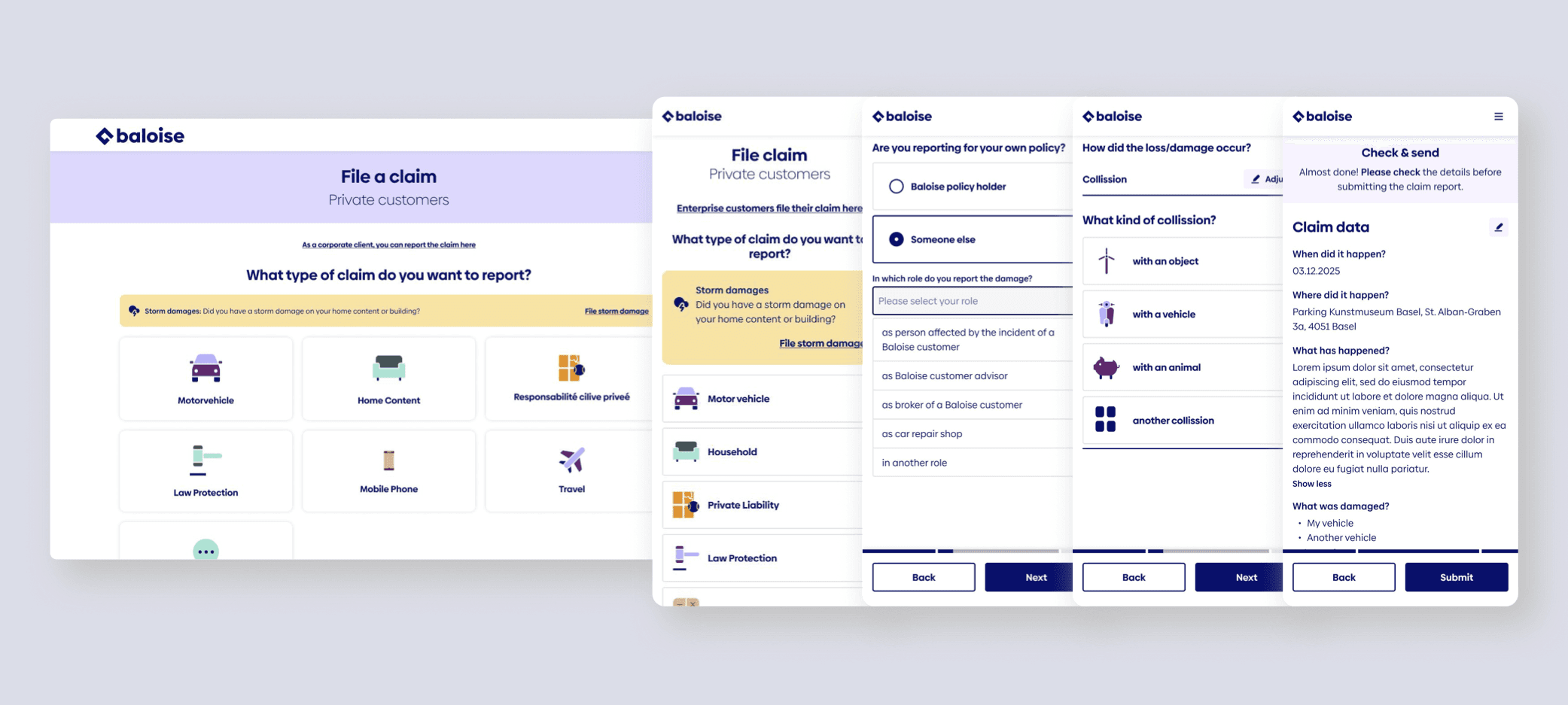
A new online claim form should be designed because of a new backend system. The claim form should improve the data quality and enable end-to-end automation.
Preliminary studies have shown that the online customer experience is highly frustrating and that most of online interactions end in a manually created claim report over the phone.
Claims reported online lead to internal frustration and increased costs. The current situation and processes are costly and are neither designed to suit the people affected nor customer service employees.
Therefore, customers should be able to file a claim (the first notice of loss) simple and fast. Customer service should spend less time on filing claims, calling customers and collecting missing data. The focus was on a specific use case to then scale it further and include more insurance products and claim types.
Product Designer. Responsibilities included user research, design, testing, monitoring and stakeholder alignment.
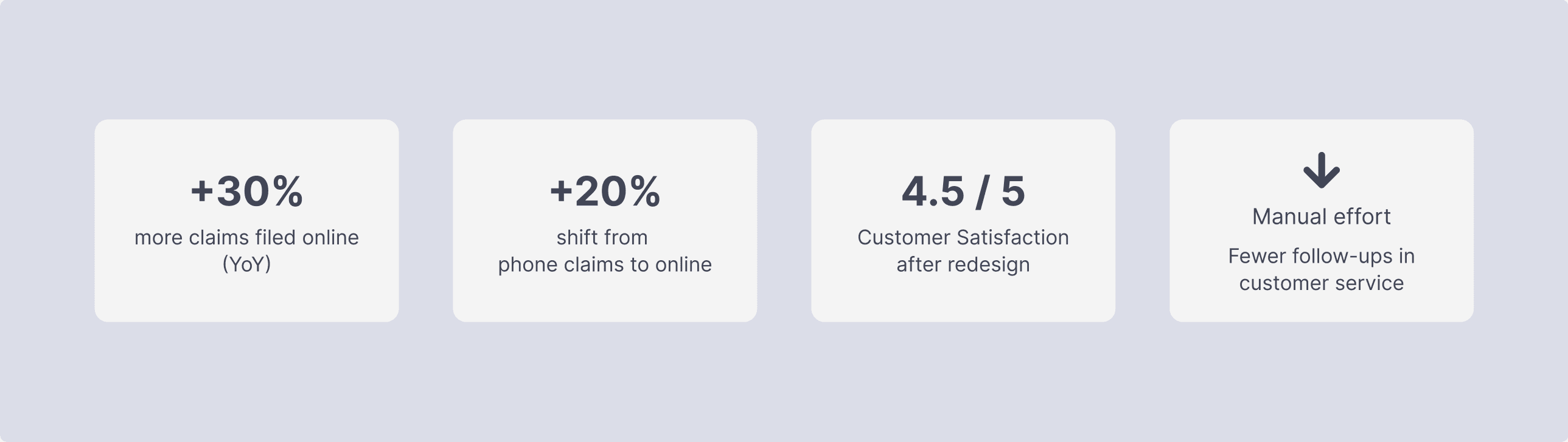
Usage: increased number of filed claims by 30% within the year
Efficiency: ratio online claims vs. filed with customer service increased to above 20% after go-live, especially during peak periods, indicating a noticeable reduction in customer service workload
Customer Satisfaction Score: The new online claims form achieved a CSAT of 4.5 / 5 since go-live, confirming a positive response
Conversion rate tracking was limited due to GA configuration issues at the time.
Discovery & Problem Definition
conducted competitor research to identify customer needs and behaviour; also conducted business analysis to define business requirements
prioritised customer feedback, analysed CSAT and data from customer service
User Flow & Design:
designed user flow and tested wireframes to test user interaction and whether structured data collection is fulfilled
introduced new design principles including transparency, single-task focus and low cognitive load.
created UI design, navigation in alignment with engineers and business stakeholders (customer service and integration team of new backend system)
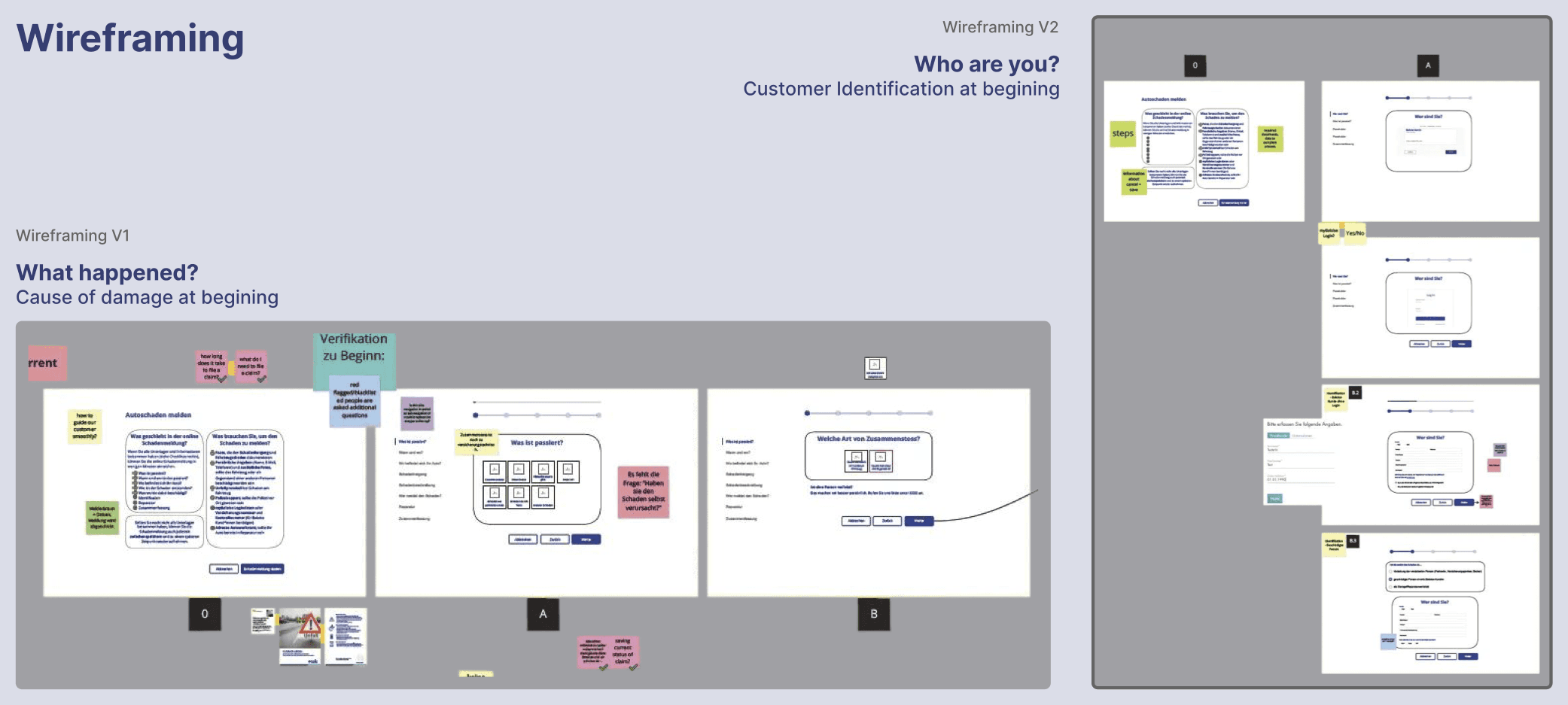
Wireframing: Exploration with different start (v1) following mental model (v2) efficient for logged-in users entering from portal. Decision for v2 supporting end-to-end automation and portal users.
MVP & Implementation:
iterative design process with usability testings, refining design in close collaboration with product team and key stakeholders. Implementation done in close collaboration with software developers.
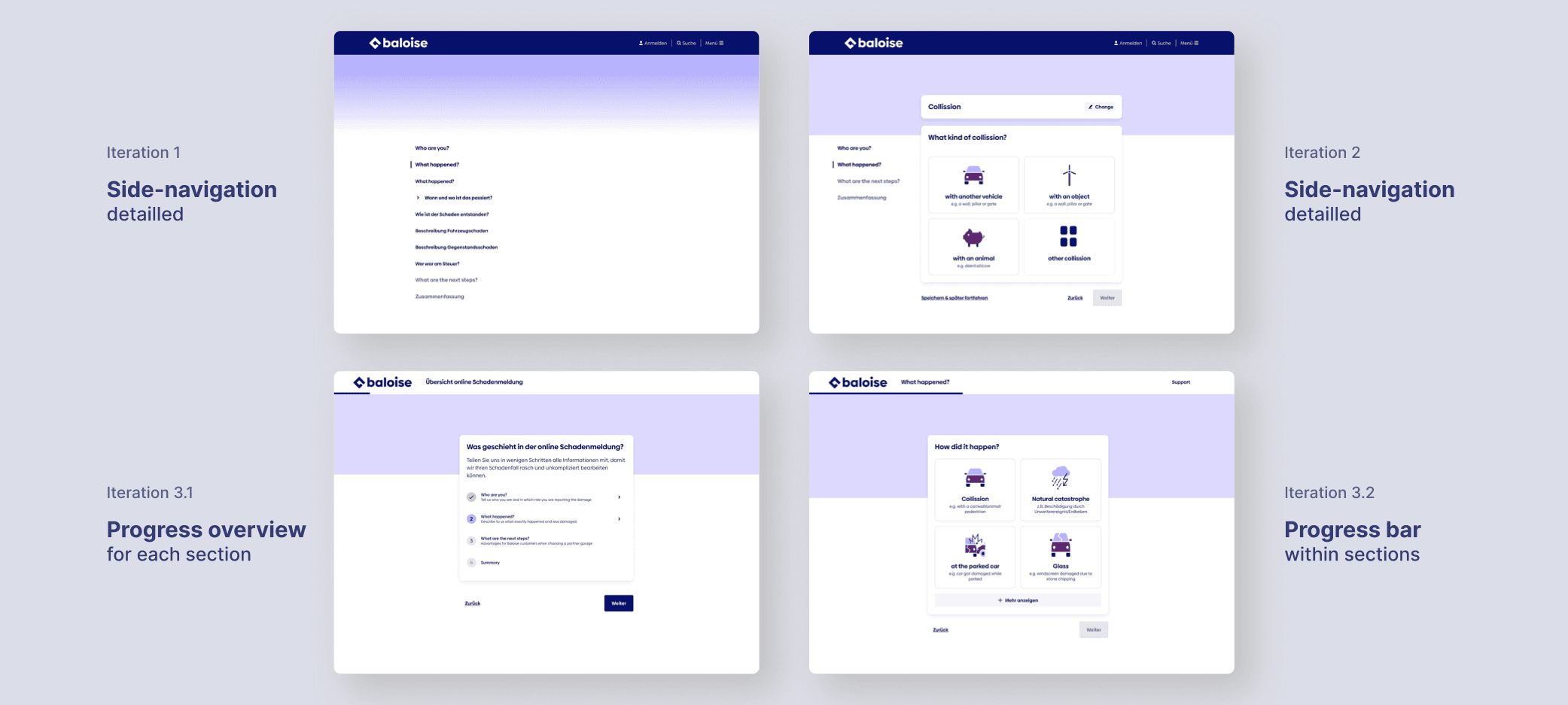
Navigation: test users overlooked side navigation (iteration 2) during usability testing. Progress bar in addition with progress overview between every section worked for mobile and desktop.
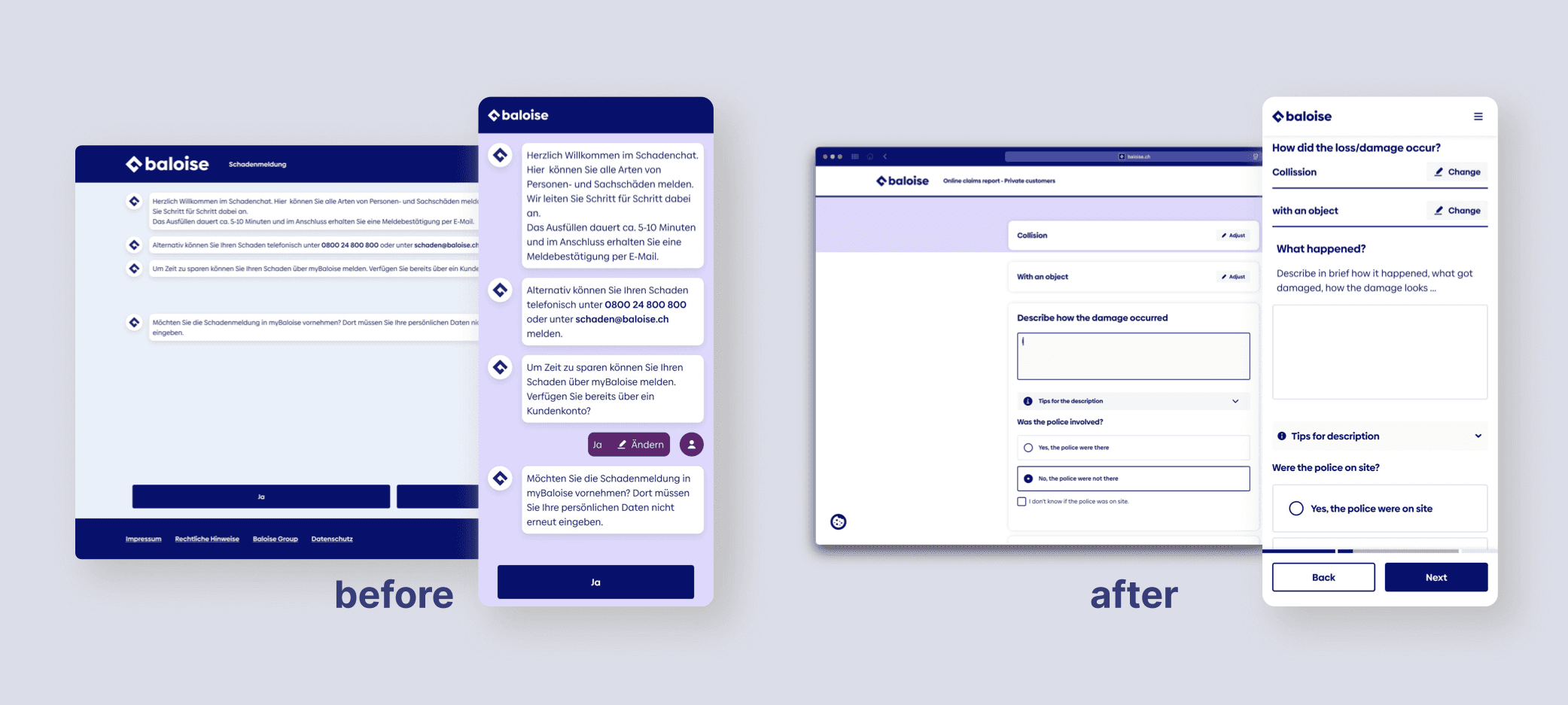
Before: ClaimChat with static flow, collecting unstructured data. After: Structured data collection of filed claim and streamlined entry points.
Figma, Miro, Hotjar, Google Analytics, Splunk
Linn 2026